A Friday in October is the right time to cook this. Two friends arriving at eight, not a lot of daylight left, and you want something that works without standing at the stove with a thermometer. Carbonara is that dish — if you understand what it’s actually doing.
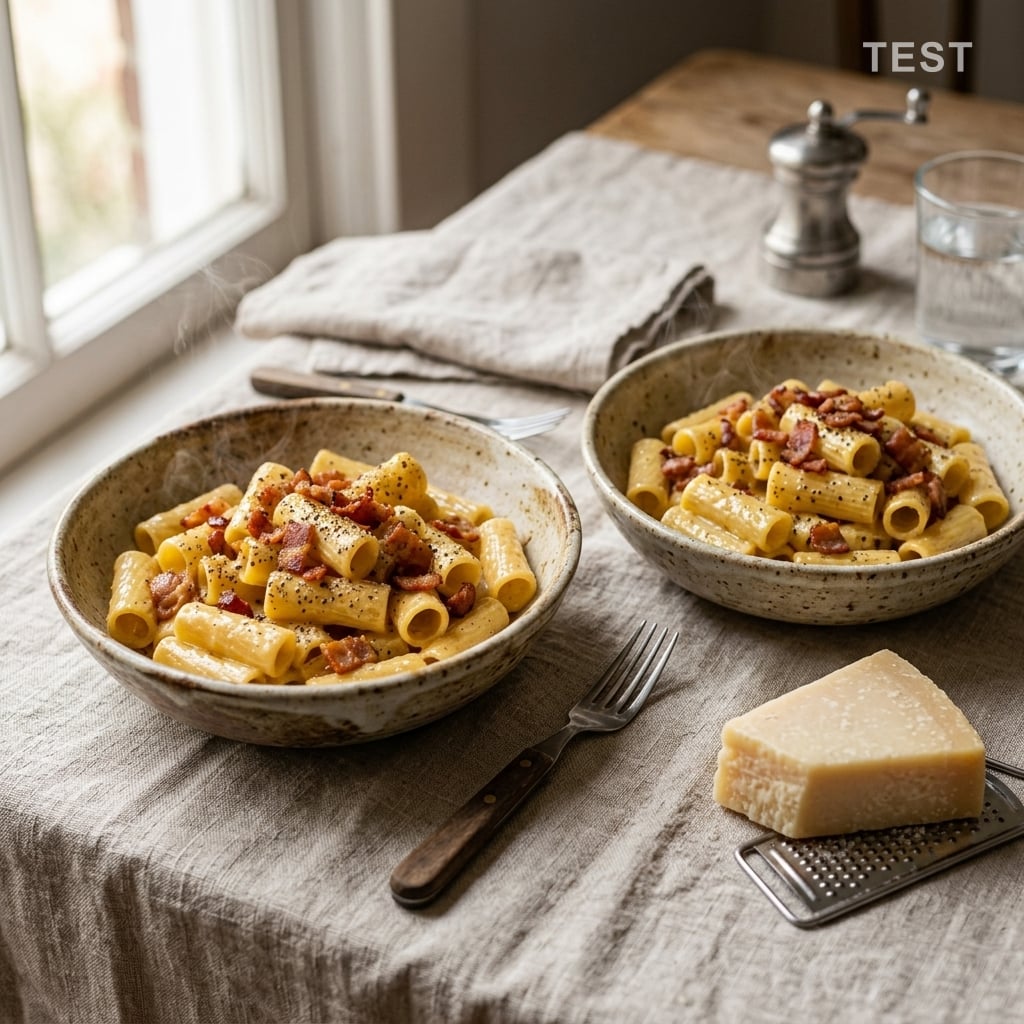
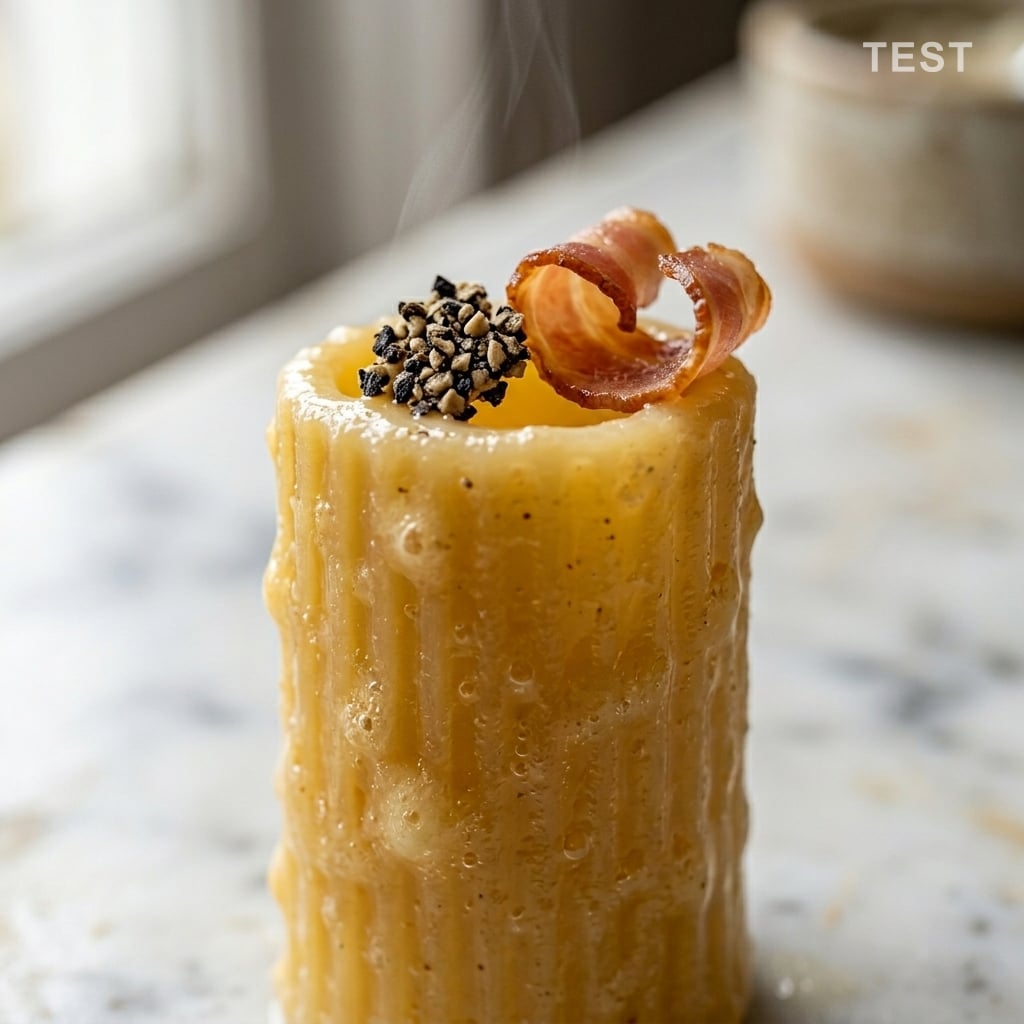
What you’re aiming for is a sauce that clings rather than pools. Each tube of rigatoni coated evenly, the surface catching the light with a faint gloss. The smell when the fat renders in the pan — slightly savoury, faintly nutty — is the signal that the base is ready. The whole thing, from water on to plates on the table, takes under half an hour.
Why you’ll love this recipe
Ingredient Notes
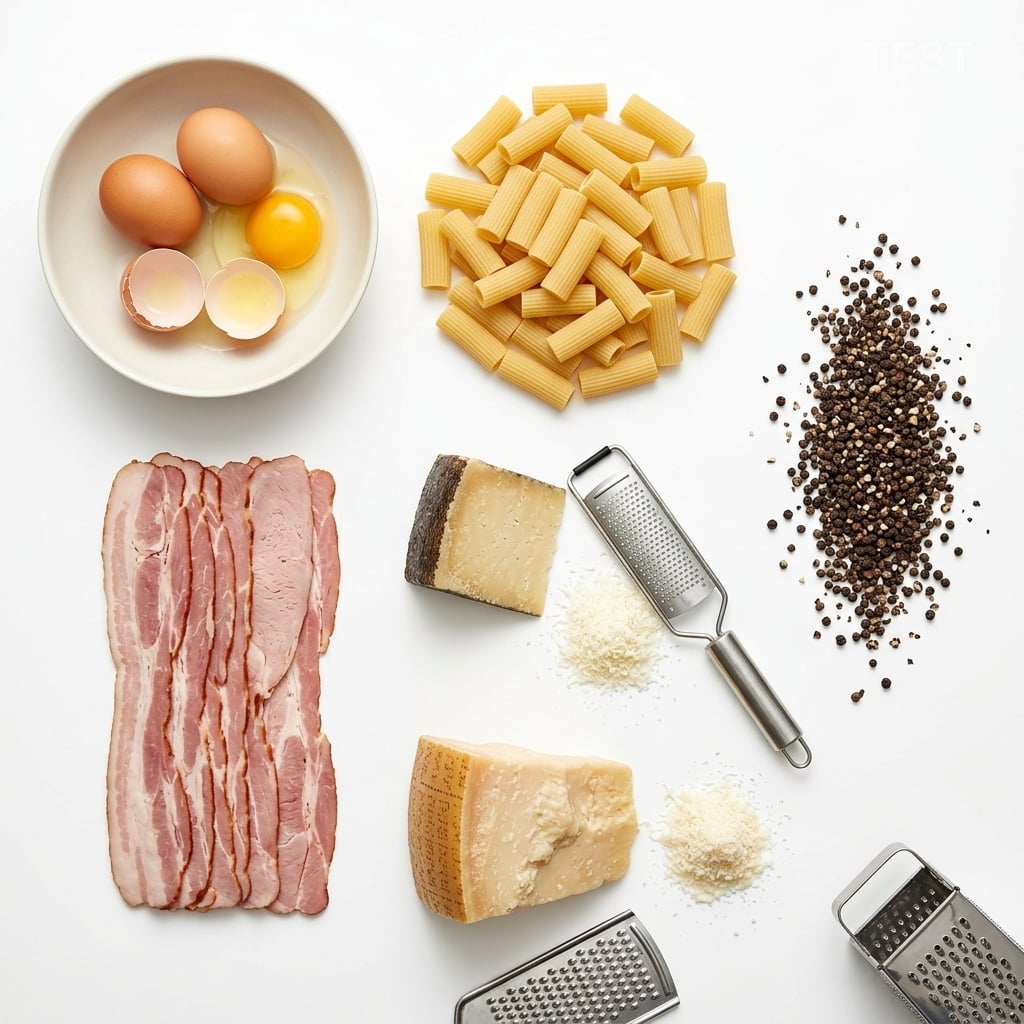
Five ingredients. Every one of them matters.
- Rigatoni (or spaghetti) : The tube shape traps sauce inside — each bite carries more. Spaghetti works and is the Roman standard, but rigatoni gives you more margin. Either way, use bronze-die pasta: the rough surface holds the emulsion better than smooth-extruded varieties.
- Egg yolks + 1 whole egg : The fat in the yolks is what makes the emulsion stable. Two yolks per serving is the baseline. One whole egg per two servings lightens the texture slightly and adds a small amount of water to help the cheese dissolve. Do not use only whole eggs — the ratio shifts and the sauce thins.
- Pecorino Romano + Parmigiano-Reggiano : Pecorino is sharper, saltier, and is the primary cheese. A 60/40 blend with Parmigiano-Reggiano mellows the edge without erasing it. Grate both fine — fine enough that the cheese disappears entirely into the egg mixture. Any lumps will cook into specks rather than emulsify.
- Coarsely cracked black pepper : Not background seasoning. In carbonara, black pepper is structural — it cuts the richness of the yolk-and-fat emulsion and keeps the dish from sitting heavy. Toast the peppercorns briefly in a dry pan before cracking them. The volatile oils are released in seconds and the difference is immediate.
- Turkey bacon : We are using turkey bacon in place of guanciale, which in Rome is cured pork jowl. The principle is identical: you need rendered animal fat pooling in the pan before the pasta arrives. Cook the strips over medium-low heat, flat, until the fat runs and the edges colour. That pooled fat — not the meat — is where the emulsion begins. Do not drain it.
The Case Against Cream
Heavy cream is roughly 35–40% fat and 50–60% water. When you pour it into a hot pan, what you are adding is mostly water. That water does three things, none of them useful. It dilutes the fat-to-protein ratio that makes the egg emulsion stable. It lowers the temperature at which egg proteins coagulate — meaning the window between silky and scrambled gets narrower, not wider. And it prevents the sauce from clinging: water-heavy sauces slide off pasta rather than coating it. The common belief is that cream makes carbonara safer to execute. It works against you on every technical count.
The Case Against Lardons
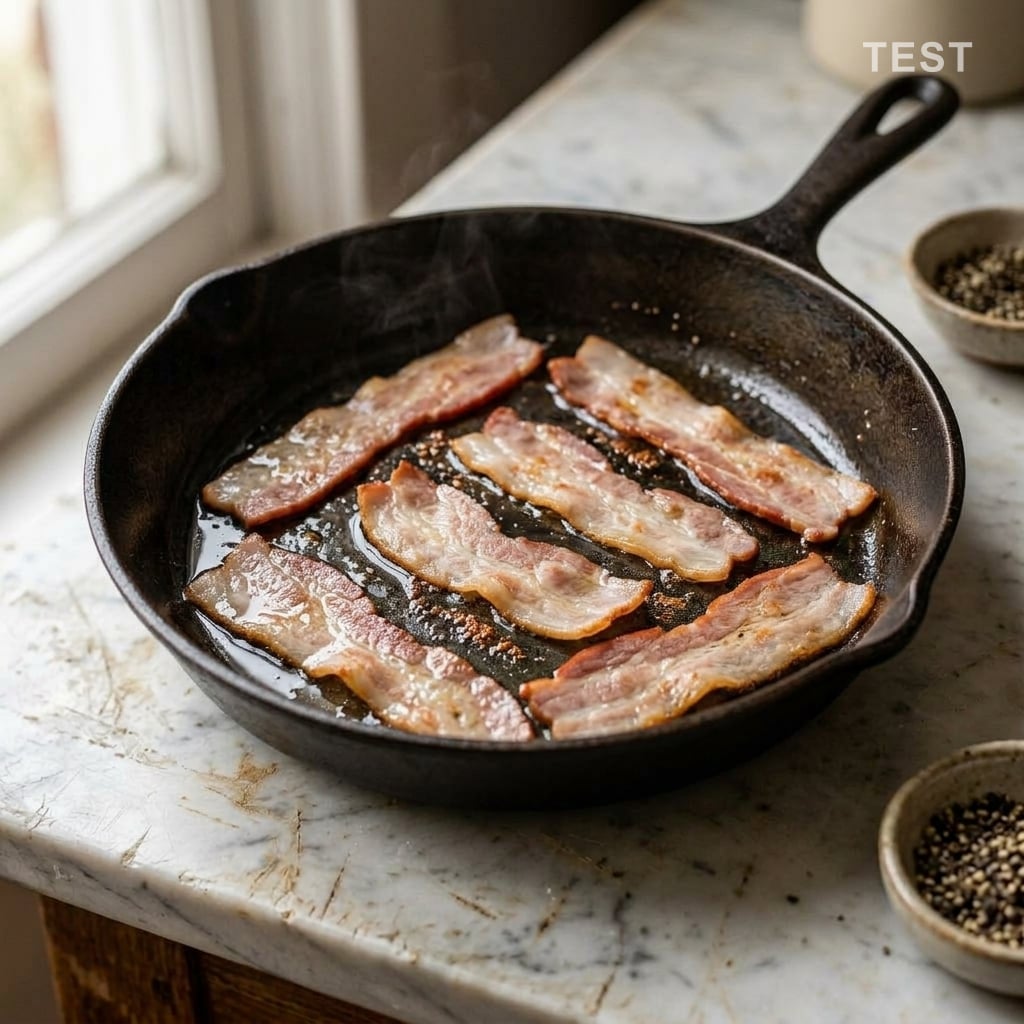
Cube-cut cured meat does not render the way this dish needs. The fat stays locked inside the pieces, and you end up with chunks sitting on top of a sauce that has no fat base to speak of. What the dish requires is rendered fat pooled in the pan — warm, slightly fragrant, ready to receive the pasta. With turkey bacon strips cooked slowly over medium-low heat, that pool forms. The strips colour at the edges while the fat runs out and collects in the pan. That is the moment you start boiling your pasta, if you have not already. Timing matters here.
Building the Ratio
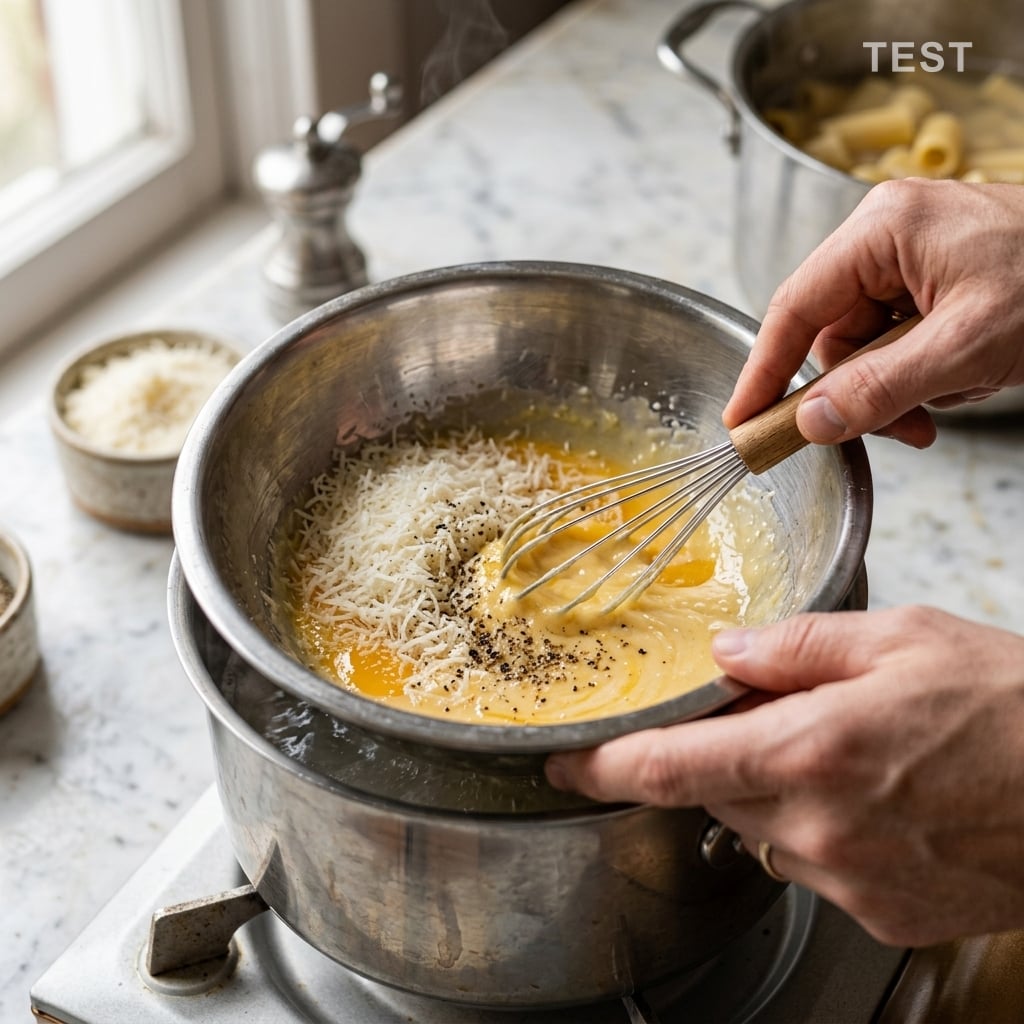
Two yolks and one whole egg per serving. Around 40g of finely grated Pecorino Romano per person, with Parmigiano filling the rest if you are using the blend. Whisk them together until completely smooth — the cheese must dissolve into the egg, not sit in it. Reserve at least one full ladle of pasta water before you drain; that starchy water is your only adjustment tool. Add it warm, not boiling. It adjusts the consistency and stabilises the emulsion. Nothing else does that job.
The Moment You Cannot Rush
Pull the pan off the heat before the egg mixture goes in. This is the non-negotiable step, and it is the one most recipes understate. Toss the drained rigatoni in the pan with the rendered fat first, coating every piece. Then add the egg-and-cheese mixture and toss continuously, adding pasta water in small amounts — a tablespoon at a time. What you are watching for is the shift: from liquid to something that coats the back of the spoon and holds its shape for a second before flowing. The residual heat from the pasta and the pan does the work. Ninety seconds of steady movement. An active burner overcooks it every time.
Plating, and Why It Cannot Wait
Plate immediately. Carbonara does not hold. The emulsion is stable for a few minutes off the heat but begins to tighten as it cools, and what looked glossy on the stove looks dry by the time it reaches the table if you are not quick. Crack more pepper directly over each plate — the warmth of the pasta releases the aroma within seconds. A small amount of extra Pecorino on the side is not excessive. It gives your guests something to add, and it melts into the surface of the pasta in a way that looks, without any deliberate effort, considered.
Tips & Tricks
- Salt your pasta water until it tastes of the sea — this is the only point at which you can season the pasta itself, and under-salted pasta flattens every other flavour in the dish.
- Grate the cheese immediately before using it. Pre-grated Pecorino contains anti-caking agents that prevent it from melting smoothly into the emulsion. A fine Microplane is the right tool.
- If the sauce looks too tight, add pasta water a tablespoon at a time and toss. If it looks too loose, thirty more seconds off the heat will pull it back. Water and movement are the two variables.
- Toast the peppercorns before cracking them — thirty seconds in a dry pan is enough. It is the difference between pepper that contributes and pepper that merely appears.
Why does cream ruin the sauce technically?
Cream is roughly 50–60% water by weight. Adding it to the egg mixture dilutes the fat-to-protein ratio the emulsion depends on, and lowers the temperature at which egg proteins coagulate — which makes the sauce harder to control, not easier. The result is a sauce that slides off the pasta rather than coating it.
My sauce scrambled. What went wrong?
The pan was still on the heat when the egg mixture went in, or it returned to the heat after the eggs were added. Pull the pan completely off the burner before adding the egg-and-cheese mixture, and keep it off. The residual heat from the pasta and the pan is sufficient — it takes about 90 seconds of continuous tossing.
Can I use only Parmigiano-Reggiano instead of Pecorino Romano?
Technically yes, but it shifts the flavour noticeably. Pecorino Romano is sharper and saltier than Parmigiano, and in a five-ingredient dish, that difference registers in every bite. All-Parmesan carbonara is milder and slightly less complex. It is a valid choice, not a technical error.
Can I swap the turkey bacon for something else?
The function of the turkey bacon here is fat-rendering — you need animal fat to pool in the pan before the pasta arrives, because that fat becomes part of the emulsion base. Thinly sliced duck breast or turkey sausage cut into strips work on the same principle. What does not work is meat cut too thick to render its fat quickly over medium-low heat.
Does the pasta shape actually matter?
Shape affects sauce distribution more than emulsion stability. Rigatoni traps sauce inside the tube; spaghetti wraps it on the surface. Both work technically, and the Roman standard is spaghetti. Rigatoni gives a slightly larger margin for error because more sauce ends up inside the pasta rather than sliding to the bottom of the bowl.
How do I know when the emulsion is set correctly?
Drag a spoon through the pasta in the pan. The sauce should hold a trail for a moment before flowing slowly back, and it should coat the back of the spoon without running off immediately. If it looks liquid, keep tossing off the heat. If it looks dry and tight, add one tablespoon of warm pasta water and toss again.
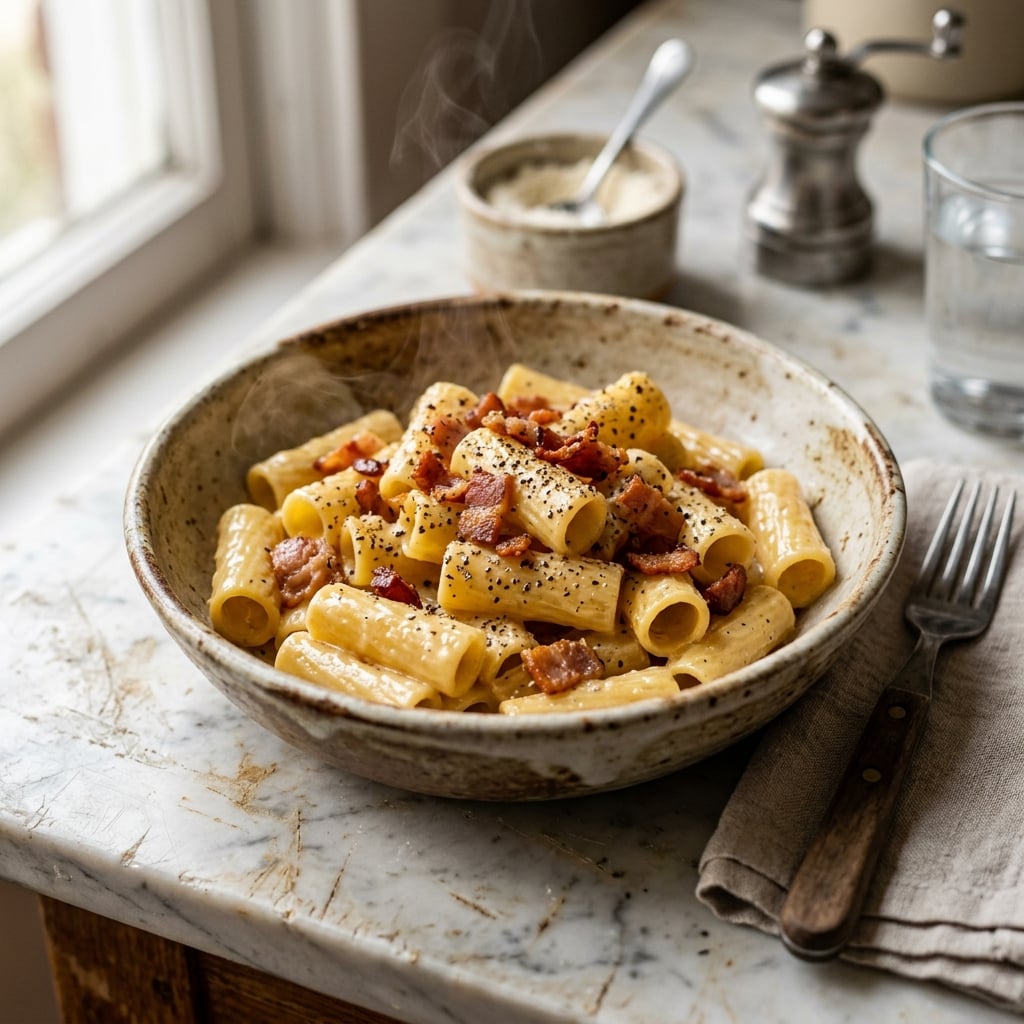
Roman Carbonara (Turkey Bacon)
Italian
Pasta / Main Course
A two-serving carbonara built on the correct ratio of egg yolks, Pecorino Romano, and rendered turkey bacon fat — no cream, no shortcuts.
Ingredients
- 200g rigatoni (or spaghetti), bronze-die
- 4 egg yolks, at room temperature
- 1 whole egg, at room temperature
- 60g Pecorino Romano, finely grated
- 20g Parmigiano-Reggiano, finely grated
- 100g turkey bacon, in strips
- 1 tsp whole black peppercorns
- 2 tbsp pasta cooking water (reserved, warm)
Instructions
- 1Bring a large pot of heavily salted water to the boil.
- 2Toast the peppercorns in a dry frying pan over medium heat for 30 seconds until fragrant. Crack coarsely and set aside.
- 3Cook the turkey bacon strips in the same pan over medium-low heat until the fat has fully rendered and the edges begin to colour — about 6 to 8 minutes. Remove the strips and set aside; leave all the rendered fat in the pan.
- 4Whisk the egg yolks, whole egg, Pecorino, and Parmigiano together in a bowl until completely smooth. There should be no visible lumps of cheese.
- 5Cook the rigatoni until just al dente. Reserve two full ladles of pasta water before draining.
- 6Pull the pan completely off the heat. Toss the drained rigatoni in the pan with the rendered fat, coating every piece.
- 7Add the egg-and-cheese mixture and toss continuously, adding warm pasta water one tablespoon at a time, until the sauce clings and holds a brief trail when you drag a spoon through it — about 90 seconds.
- 8Return the turkey bacon strips to the pan, add the cracked pepper, toss once more, and plate immediately.
Notes
• Grate the cheese immediately before using it — pre-grated Pecorino contains anti-caking agents that prevent it from emulsifying cleanly.
• The pan must be completely off the heat before the egg mixture goes in. Residual heat is sufficient and more controllable than an active burner.
• If the sauce looks too tight on the plate, a tablespoon of warm pasta water stirred in will loosen it. If it looks too thin, 30 more seconds of tossing off the heat will pull it back.
Nutrition Facts (per serving, estimated)
| 545 kcalCalories | 36gProtein | 54gCarbs | 20gFat |